

tumbling headfirst into a river in the dark
out of which we climb ashore and find the house by the side of the road

What we do anywhere matters, but especially here. It matters very much. Mesas and mountains, rivers and trees, winds and rains are so sensitive to the actions and thoughts of humans as we are to their forces.
They take into themselves what we give off, and give it out again.
~~Edith Warner
Life is weird and weirdly circular, with interlocking spirals as magical as they are startling. Like when the universe leaves crumbs, arranging them into squiggly loops, plopping them at our feet to see if we’re paying attention.
I originally posted this story on another publication, but re-visited it just now, giddily looking ahead to a trip to Santa Fe (oh dear desert, I’m coming!) that I’ll be making in April, as a guest speaker at a women’s summit.
About those crumbs. Years back in Idaho I met a guy who sold antique bottles at the flea market. Every day except for flea market days he drove his rusty pickup into the sagelands looking for abandoned homesteads, where he’d dig in the trash middens for bottles. He shyly confessed to me he’d been an alcoholic, and that it cost him his former life.
I didn’t ask what that life was, but knew a kindred spirit when I met one: someone with a compulsion they’d set aside, yet would nonetheless spend their days digging for it. In his case, looking for cloudy bottles filled with dirt and dead bugs, to wash clean so someone might see beauty in their emptiness. In my case, returning again and again to the canyon through my writing, holding it to the light for my readers to see.
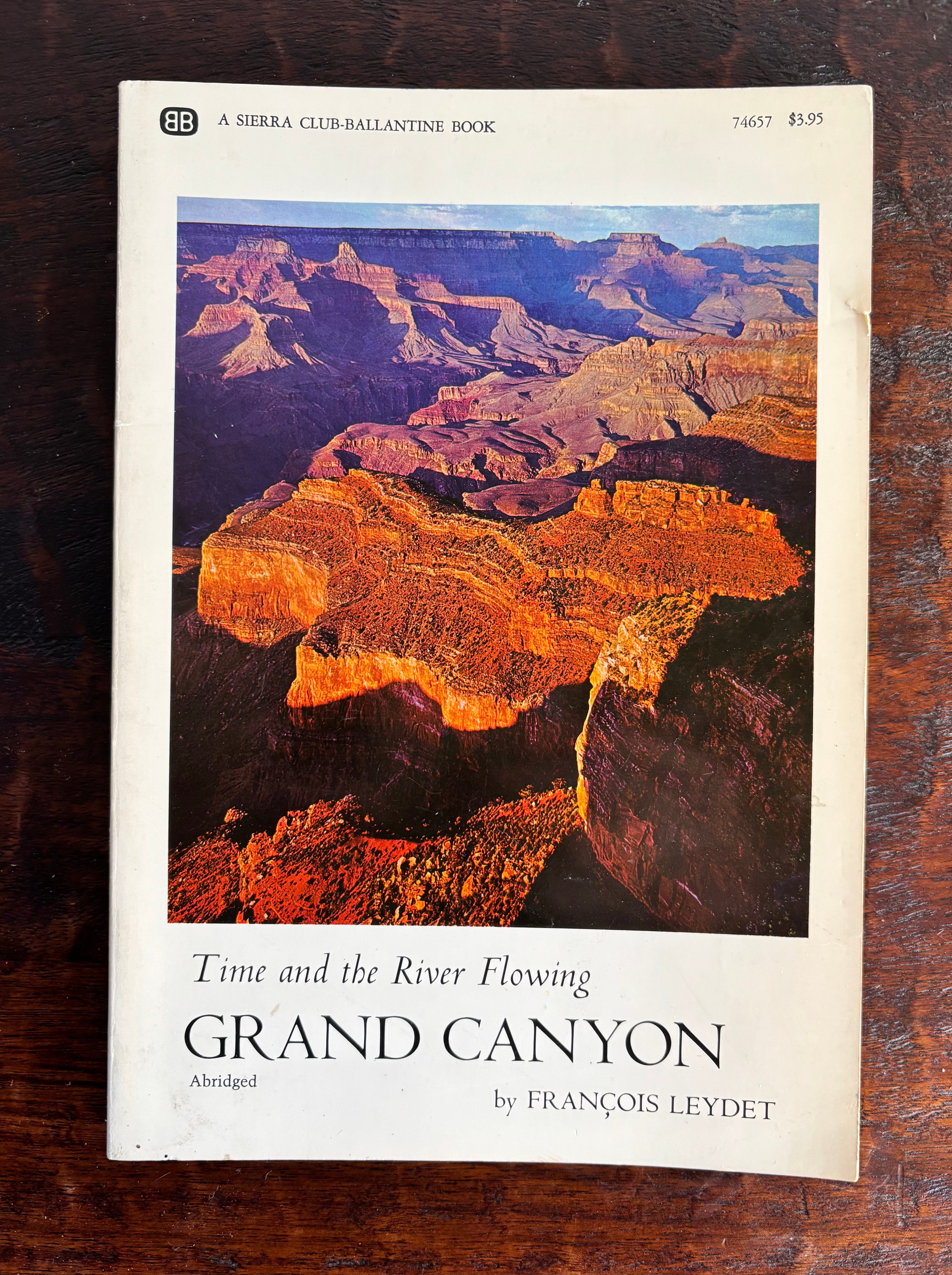
Today when I dragged this story here, I took a break and randomly plucked Time and the River Flowing (that’s it in the photo above) off my bookshelf. Despite the compelling title, a title I’ve quoted not realizing its source, I’d never finished reading it. I flipped a few pages, and there was Leydet’s inspiration for the title:
This is the day when life and the world seem to be standing still—only time and the river flowing. . .
~~Edith Warner
So, dear universe: I’ll see your crumbs and raise you this story I wrote a year ago about Edith Warner, and the spirals wending together that brought her story to me, now here.
This is the story of a house, a house that stood for many years beside a bridge between two worlds.”
~~Edith Warner, unfinished manuscript
Part One, the cake.
I had a simple idea: a recipe for a cake made by someone I’d never heard of, that I’d pair with a book I can’t stop thinking about. That’s where it started.
Tumbling headfirst into a river in the dark is what happened.
Imagine a river, and standing near it. Standing near it while surrounded by dark, and having no idea how fast or wide, or even, how deep. You don’t think about where the river is going, where it could carry you; for now it’s just a river. Maybe you edge close enough to poke a toe in and feel the cold; maybe sense a tug of swiftness. You might even think, There, that’s it, that’s the river.
You could of course choose to walk along the bank, never mind the getting wet part. Submersion is what readers crave, and so you lean closer, sinking yourself into the words, the story pulling you under. At some point you’ll emerge. The shoreline is no longer an option.
Now that I’ve clambered back ashore I want to tell you how this cake came to me, how the cake came about and became famous, and why, though I had originally thought A Swim in the Pond in the Rain by George Saunders was a book to read with a lovely wedge of the cake, that didn’t happen.
Before we can cake it up we need to talk about Oppenheimer. I know, I know! cake is on the horizon. If you really must, go ahead and mise en place the ingredients (recipe follows down below), then come back and sit with the notion of a tiny, no water or electricity, everything cooked and baked on a woodstove, house at the side of the road that became the go-to dinner spot for the scientists of the Manhattan Project.
Yes, that Manhattan Project.
My life as a child did not prepare me for the fact that the world is full of cruel and bitter things.
~~Robert Oppenheimer
My friend Ben the filmmaker
You might have seen the film Oppenheimer, and if so, you have the gist of what went on and what the Manhattan Project was for, and what came of it. American Prometheus, by Kai Bird and Martin Sherwin (they won a Pulitzer for it) tells the story of Oppenheimer, if you like a slather of backstory and biography.
Here’s the bit that fascinated me and lead me to Edith Warner’s chocolate cake, and where my friend Ben Shedd comes in. Ben is a scientist and documentary filmmaker, an Academy Award winner, one of the creators of the beloved WGBH (yes: Julia Child’s WGBH) science television series NOVA; he taught film at Princeton and in Singapore and Sweden, and now, lives and teaches film in New Mexico at the American Indian Art Institute. I hadn’t seen Ben in a few years, but we recently met up for coffee here in my town, and he began telling me about his new partner, the large-format photographer Meridel Rubenstein.
Our conversation meandered from Meridel to Minor White (the photographer and Meridel’s mentor, and one of the photographers whose work I’d included in my senior art history project), and then to someone named Edith with a tearoom in New Mexico, and back to Meridel’s Critical Mass exhibition. There was no mention of cake. That came later.
“The term “Critical Mass” means the smallest amount of fissionable material that, when amassed, will sustain a self-supporting chain reaction. CRITICAL MASS was a collaborative photo/text/video installation that takes as its subject the worlds of scientists and Native Americans as they intersected at the home of Edith Warner during the making of the first atomic bomb in 1944 in Los Alamos, New Mexico.”
~~Amarillo Museum of Art
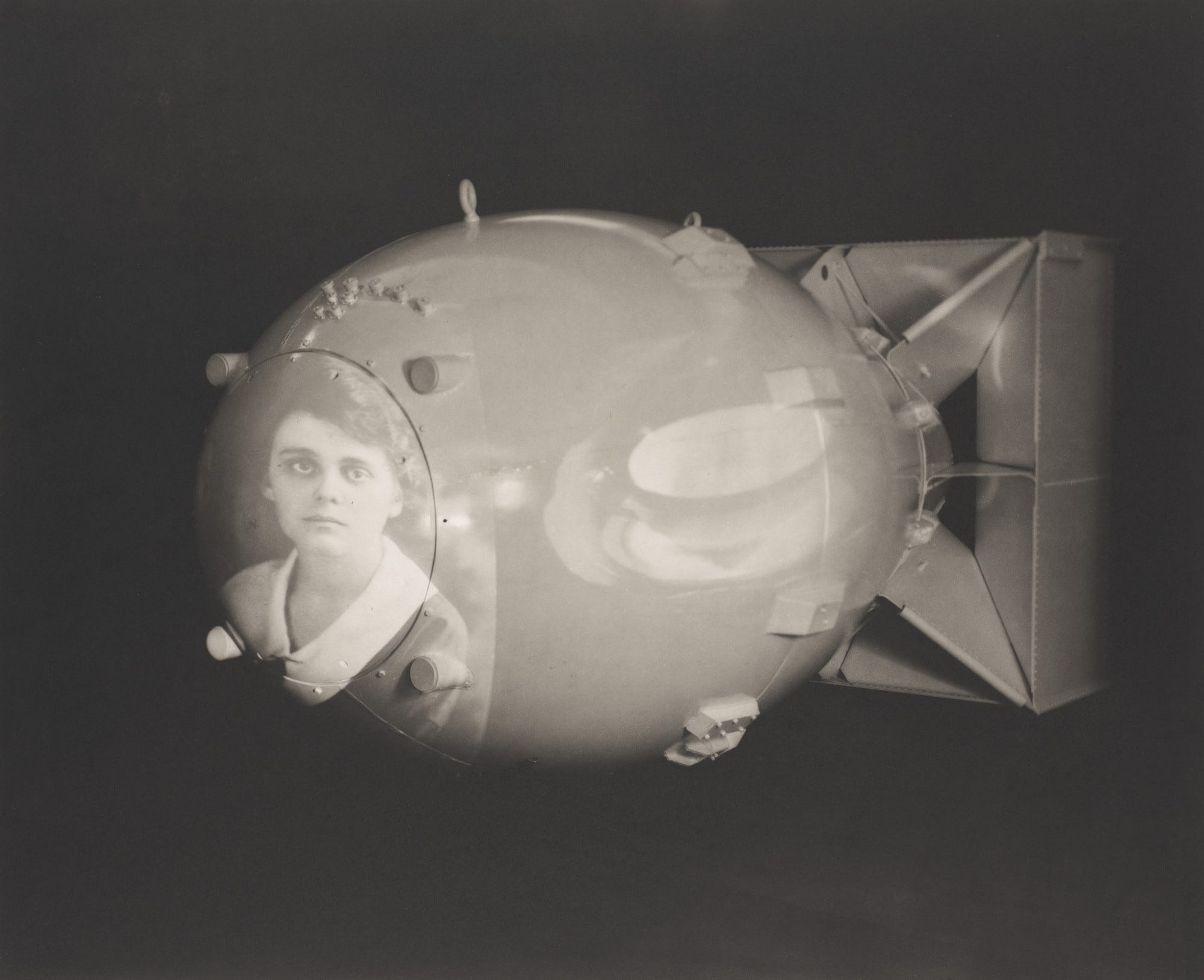
The photo way back yonder toward the top, Fatman and Edith, is one of Meridel’s, and depicts Edith Warner, our cake recipe creator. The photo was displayed in 2022 at the Museum of Modern Art as part of the collection, Our Selves: Photographs By Women Artists by Helen Kornblum; here is a brief description of Meridel’s intentions for the photo:
With this photograph she conflates war with the feminine. She has the inhumanly destructive warhead, the plutonium bomb, called Fatman, dropped on Nagasaki, juxtaposed with a portrait of a woman, Edith Warner, and a nurturing, warm cup of tea.
~~Helen Kornblum
Who is Edith Warner and what’s up with her cake?
In 1922, a 30 year-old Pennsylvania secretary named Edith Warner traveled to New Mexico to spend time on a remote guest ranch. She knew nothing about New Mexico, but her physician had prescribed “a year of outdoor life with no responsibilities.” When a friend described the solitude of a ranch in Frijoles Canyon, Edith made that her destination. The doctor’s advice, the conversation with her friend, and Edith’s decision happened quickly. To quote my grandmother, she just upped and went.
Multiple accounts say she was having a breakdown, was stressed, was unhappy with her life. In her journal, Edith wrote, “Perhaps the war and post-war years had been too strenuous. Perhaps unknown forces were changing the pattern of my life.”
What happened next, and how Edith’s life unfolded, is told in the book, The House at Otowi Bridge: The Story of Edith Warner and Los Alamos by Peggy Pond Church. I don’t mean to leave you with Edith’s story dangling—well, a bit, for good reason—only to say that as I read The House at Otowi Bridge I kept wondering how have I never read this?
I knew the book from my Grand Canyon days, mostly because between river trips I craved time alone (an introvert traveling two weeks downriver, camping with 30 people can have that effect) and time alone has always included a book. In Flagstaff, where the river outfitter I worked for was based, there was a newstand that had a glorious selection of southwest-themed books, from natural history field guides to Tony Hillerman, to early accounts of the area, and I happily spent too much of my paycheck there between trips, also buying Vogue, to remind the boys I might sling the f-bomb with the grace of a sailor, but that wasn’t my whole story.
I also have a dim memory of picking up The House at Otowi Bridge and putting it back down again at (my all-time favorite book store), Maria’s Bookshop in Durango.
Peggy Pond Church was a poet (she’s called the First Lady of New Mexico poetry) and an author born in 1903 in New Mexico. In 1922 (that year again!) she left New Mexico for Smith College. Two years later she lived at the Los Alamos Ranch School, founded by her father: her path and Edith’s crossed, and re-crossed even before they became friends, and it’s through The House at Otowi Bridge Church recounts her memoir, and the story of Edith Warner unfolds.
“Those first four months at Frijoles brought me the first conscious awareness of many things.”
~~Edith Warner
During her ranch stay Edith began thinking of remaining in New Mexico. Today she might have bought a van and started a #vanlife Instagram page. She would leave after that first year, then return for good four years later with a dim idea to find some kind of work. By chance (and those unknown forces she spoke of) this slight, shy woman was hired to fill the station manager position for the narrow gauge rail station located at the Los Alamos School.
About that Eat Pray Love and Wild genre of adventure-seeking-finding-one’s-self; it wasn’t invented as recently as we might think. In her forward to House Church recounts this:
“Many of us hoped that Edith would someday be able to write her story. She made an attempt, but after the first few pages it sounded to her too much like the standard adventure: White woman moves West. Lives among Indians. Better nothing than that, she thought, and gave it up.
Edith’s station job came with a small, nearly unlivable house. She had no money, would be living alone, charged with selling gasoline and cokes at the station store, and responsible for guarding the freight deliveries. She’d have to repair the house on her own, with no resources. She didn’t have any idea how or if she could manage it, but she had a special recipe for chocolate cake, and a sudden, wild dream to turn the little shack into a wayside tea room.
If you’ve ever harbored (nested, protected, shepherded) a dream that, on the face of it made no sense whatsoever or seemed impossible, then you might also know there’s the dream, and across a wide expanse (in my experience, the wilder the dream the wider) the place we imagine we might find ourselves once that dream comes true.
These two places—the dream and where we believe the dream lives—are the easy part of the journey; it’s one thing to stand on the side and look across to the other. It’s in building the bridge between dream and where our story might lead that is the daunting part.
The story I’m pairing with this cake is the cake and how it came to be, and is about a woman living a life her life between two worlds. It’s about bridges, the ones we build, tear down, and the ones we might have never crossed.
In 1942 the Manhattan Project changed everything
In the Spring of 1922 (seriously? again?) Oppenheimer went to New Mexico at his father’s urging to get stronger through outdoor experiences. He learned to ride horses, and developed a love of New Mexico while on horse packing trips through the Sangre de Christo and Jemez Mountain Ranges. During one of these pack trips Oppenheimer rode up onto the Pajarito Plateau, across the Valle Grande of the Valles Caldera, and to the isolated Los Alamos Ranch School.
Later, in 1937, Oppenheimer was in New Mexico and stopped at Edith’s teahouse. She served him tea and a slice of chocolate cake. It would be Oppenheimer who suggested the school be used for the Manhattan Project; the U.S. government seized the property, and the school was torn down.
Though Edith Warner’s home was across the bridge and not directly affected by the seizure, the tea room on the school property was ordered to be shut down due to security concerns. With that closure, Warner tried to continue operating the tea room out of her residence, but the tourist trade to the plateau ended completely due to the site being locked up as a military installation. A lack of income forced her to consider having to move, but Robert Oppenheimer, a frequent attendee of her tea room since 1937, convinced her to stay and reconfigure her business directly toward the on-site scientists. She agreed and re-opened her home as both a tea room and a dinner restaurant, leading to her business once again booming thanks to her home acting as a getaway for scientists like Niels Bohr, Philip Morrison, and Enrico Fermi.
She decided to name her tea room The House by the Side of the Road. Among the various culinary options she provided, her chocolate cake would be frequently mentioned by the scientists in the years following. (info, via National Park Service)
“In 27 months, Manhattan Project scientists created the world’s first nuclear weapons. They had a six-day workweek and a goal of harnessing atomic power before Adolf Hitler did. Amidst this constant stress, morale building was in order.”
~~Los Alamos National Laboratory
Edith Warner’s tea room—with no running water, electricity, and a woodburning cookstove for all cooking and baking—provided farm-to-table fare nightly for $2 per person, with limited seatings. No tipping, no telephone for reservations. A desert respite, in the shadow of Los Alamos, with a cake that became famous.
Miss Warner, her home by the river, and her spirit of grace remain a part of everyone at Los Alamos lucky enough to have known her…Edith Warner stands in the history of those desperate times as a kind of rainbow…a sign that war and bombs are not all that mean and women are capable of building.
~~physicist Philip Morrison
Let’s have cake.
When I was a Grand Canyon river guide we had to cook three meals a day for our 13-day river journey, served to 24 guests and a crew of 6, and we did so with pretty much what Edith had in her cafe, plus some upgrades: for us the river was our running water (filtered to .02 microns using an expedition Katadyn filter), cooking and washing-up water was heated on propane camp stoves, and we kinda-sorta had refrigeration with a fleet of 75-quart Gott coolers packed with ice and dry ice to keep produce, meat, dairy (and crew beers) cold.
But we baked in cast iron Dutch ovens stacked three-high over coals, which is nearly the same as baking in a woodburning cookstove, though at least in the summer heat our stove was outdoors.
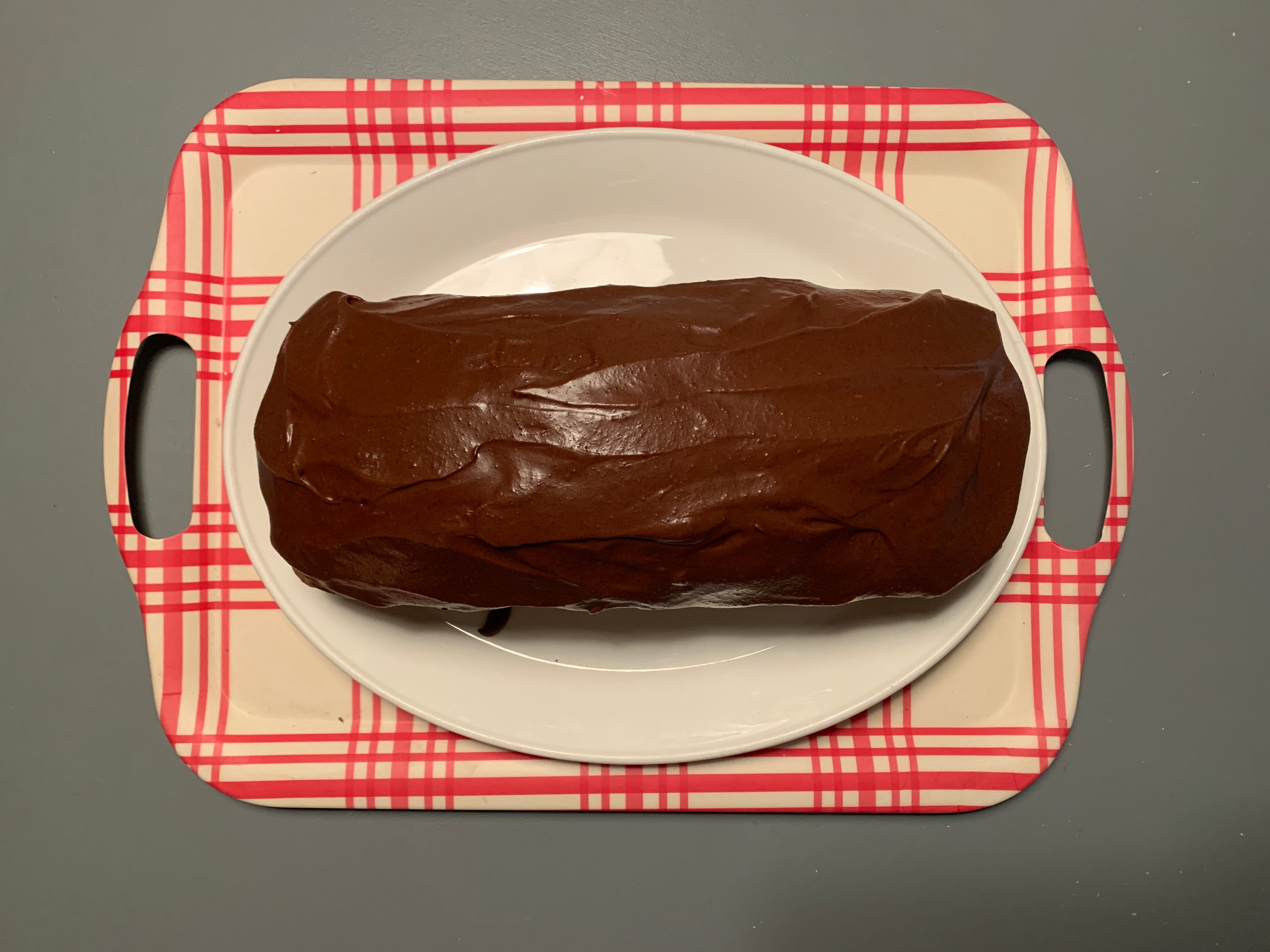
Here is Edith’s cake recipe as provided by Peggy Pond Church. Aside from using my own bean to bar chocolate instead of the baking chocolate called for (I used a 74% dark, which is lightly sweeter than baking chocolate, which has no sugar) I followed the recipe exactly. Church warns that the cake can be dry: yes. I read accounts of the cake with adorations like “moist” and “tender” and of course, it became famous for a reason. It’s not a dark or devil’s-foodish cake; that’s a good thing, I think.
Sometimes we just need to read and having no clue before we turn the first page.
Even as I’ve been writing this and flipping back through Edith (and Peggy’s) life in The House at Otowi Bridge I haven’t stopped wondering, how had I missed it? I think I passed by the book all those years ago because the story seemed so simple, and I was young and thinking that important things meant complex things.
I nearly tumbled into that trap again here, sharing my excitement about Edith and her cake. George Saunders’ work A Swim in a Pond in the Rain: In Which Four Russians Give a Master Class on Writing, Reading, and Life was, as I mentioned way back at the start, my original pairing idea for the cake; a clever twist on the whole Russian tea room notion maybe. Or maybe because Saunders helped me remember what stories worth reading (and writing) are made of, and why they speak to us in the first place.
Either way, the stories that stick with us are matter. The definition of matter isn’t complex, but the truth of it is everything.
Words are my matter – my stuff. Words are my skein of yarn, my lump of wet clay, my block of uncarved wood.
~~Ursula Le Guin
A few notes
1922: seriously, what’s up with that year? 1922 is also the year Niels Bohr, the Danish physicist who would become a close friend of Edith’s, was awarded the Nobel prize for his research on the structure of the atom. Bohr had a theory that everything depends on the standpoint of the viewer: that “harmony in nature consists of an interplay of apparently conflicting forces.”
Dusty Teal purchased The Bookshop in Durango, CO in September 1984 and changed its name to Maria’s Bookshop, a name inspired by San Ildefonso Pueblo potter Maria Martinez. When you read The House at Otowi Bridge: yes, that Maria!
Ursula Le Guin quote, Words are my Matter, Writing About Life and Books 2000 - 2016.
Hmmm. 1922 breaks down to 5. In tarot, we would look to the Hierophant as primary card and Temperance secondarily. Both speak to the need to connect to the higher self, and speak to bringing spiritual knowing into the material in a way that is for the highest and best good.
Thank you for this piece (and maybe slice)!
Well - this was fascinating - and with a good looking recipe included. I have shared your essay with my sister who did a project in high school on Oppenheimer. On my bookshelf I have 4 different Sierra Club books like the one you have pictured, but not including it, that I bought while at UC Berkeley in the late 60s, and brought with me when I moved to the UK in 1971. They are all priced the same, $3.95. Really nice books.